
Biography

The life of a quiet painter.

A condensed account of seven decades spent in pursuit of the inexpressible, drawn from studio archives and the artist’s own notebooks.

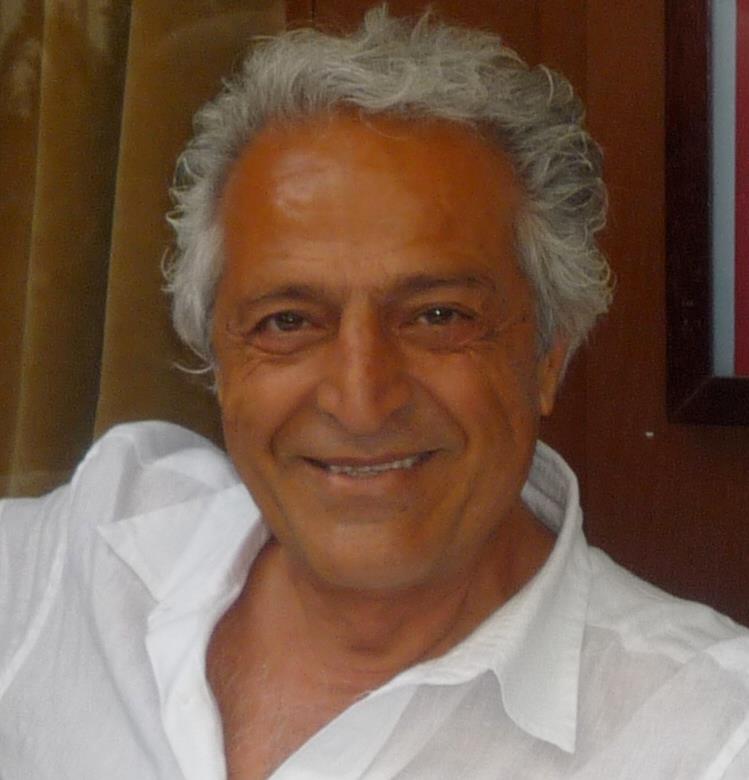
Kamran Khavarani in his Paris studio

Studio portrait of Kamran Khavarani, Paris, 2022.

1941 — 1981

Early Years in Tehran

Kamran Khavarani was born in 1941 in Tehran, Iran. He began painting at the age of 12 and was trained in classical painting by Reza Samimi. In 1966, he graduated from the University of Tehran with a Master’s degree in Architecture and a PhD in Urban Design. Khavarani began his professional career as an architect. In 1965, his conceptual design for the City Theater of Tehran was selected by an international jury. He later moved to the United States in 1981.

1981 — Present

A New Chapter in America

After settling in Los Angeles, California, he rebuilt his architectural career from the ground up. His first American project was in Beverly Hills, and upon its completion in 1984, Khavarani received the CALBO Award of Excellence in the single-family category. He later designed the World Trade Bank of Beverly Hills, earning a design award from the City of Beverly Hills Architectural Commission.

1990 — 2004

The Birth of Abstract Romanticism

Khavarani became increasingly devoted to painting after arriving in the United States. During the 1990s, he began studying philosophy and found inspiration in the works of the Persian poet Rumi. His unique painting style was recognized by the late Professor Albert Boime, renowned Social Art Historian from UCLA. Boime authored The Birth of Abstract Romanticism: Art for a New Humanity, Rumi and the Paintings of Kamran Khavarani, dedicating the entire volume to Khavarani’s work. Professor Boime credited him with creating an entirely new artistic movement known as “Abstract Romanticism,” describing it as a “one-person movement.”

2010 — 2012

Honors and Historical Recognition

In 2010, Khavarani’s drawing The Bird of Freedom was presented by the Nowruz Commission to the spirit of Thomas Jefferson and was accepted into the Library of Congress by James Hadley Billington. The presentation was officially recorded in the Congressional Record, becoming part of United States history. In 2011, the National Ethnic Coalition of Organizations awarded Khavarani the Ellis Island Medal of Honor in recognition of his contributions to America.

2013 — Present

Academic Research and Healing Through Art

In 2013, the potential therapeutic effects of his artwork became the subject of academic research.